
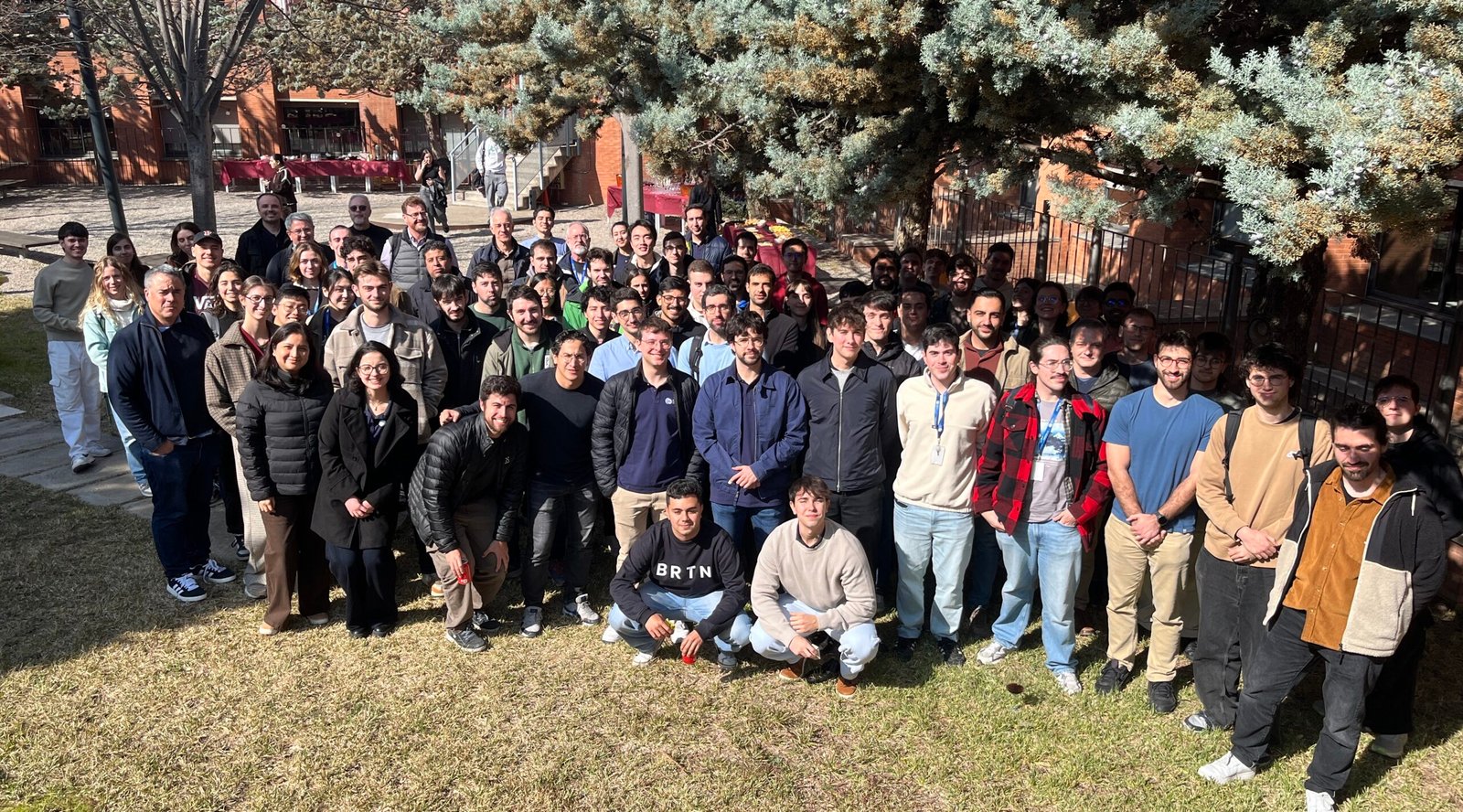
The Barcelona Supercomputing Center-Centro Nacional de Supercomputación is reinforcing Europe’s push toward next-generation computing through a training that brought together leading research and industry actors around a shared strategic vision: advancing chip technology, strengthening memory systems and building open, world-class expertise.
The BSC training “It’s the Memory, Stupid”, gathered 150 participants and connected three main European and national initiatives, The Digital Autonomy with RISC-V in Europe (DARE), Barcelona Zettascale Lab (BZL) y la EuroHPC Virtual Training Academy (EViTA), in a coordinated effort to boost Europe’s capabilities in processor design, memory technologies and open skills development.
The training was built on the Memory stress (“Mess”) research framework, recognized as the Best Paper Runner-up at the 57th International Symposium on Microarchitecture (MICRO-57). It underscored the growing importance of memory in high performance computing. As processors become more powerful, efficient data movement and storage increasingly determine overall performance, a shift that is especially evident in areas such as artificial intelligence, scientific research and industrial innovation.
In addition to the speakers from the BSC Memory and Accelerators Team,
the researchers from INESC-ID will discuss different state-of-the-art roofline modelling principles with a special attention on the Cache-Aware Roofline Model. Finally, the performance optimization experts from Intel will present Intel’s Top-Down method for performance analysis. All the speakers stressed that memory performance is now one of the defining factors of computing power ― from climate modelling and medical research to industrial simulation, these advances increasingly rely on smarter data movement rather than on faster processors.
Eduard Ayguadé, BSC Computer Sciences Department Director, highlights “By combining research, chip development and open training, BSC and its partners aim to ensure Europe not only develops advanced technologies, but it also cultivates the expertise needed to deploy them. The training reflects a broader strategy to link hardware innovation with accessible training ecosystems across the continent and positions BSC as a strategic hub for Europe’s future computing capabilities.”