
Organized by ASEMI, in collaboration with the Las Palmas de Gran Canaria city Council and the Government of the Canary Islands, the III ChipNation Congress of the Semiconductor Industry took place on December 3rd to 5th in Las Palmas de Gran Canaria. With the slogan “From challenge to revolution: leading the microelectronics ecosystem” this event had a more international flavour and brought together experts, companies, and professionals of the semiconductor sector with the goal of exploring and discussing the latest trends and advances in the semiconductor industry, at European level in general, at Spanish level in particular.
ChipNation creates a perfect space for meeting and creating new opportunities for companies, universities and R&D entities to work together. A unique forum for discussing global trends, emerging innovations, and business opportunities.
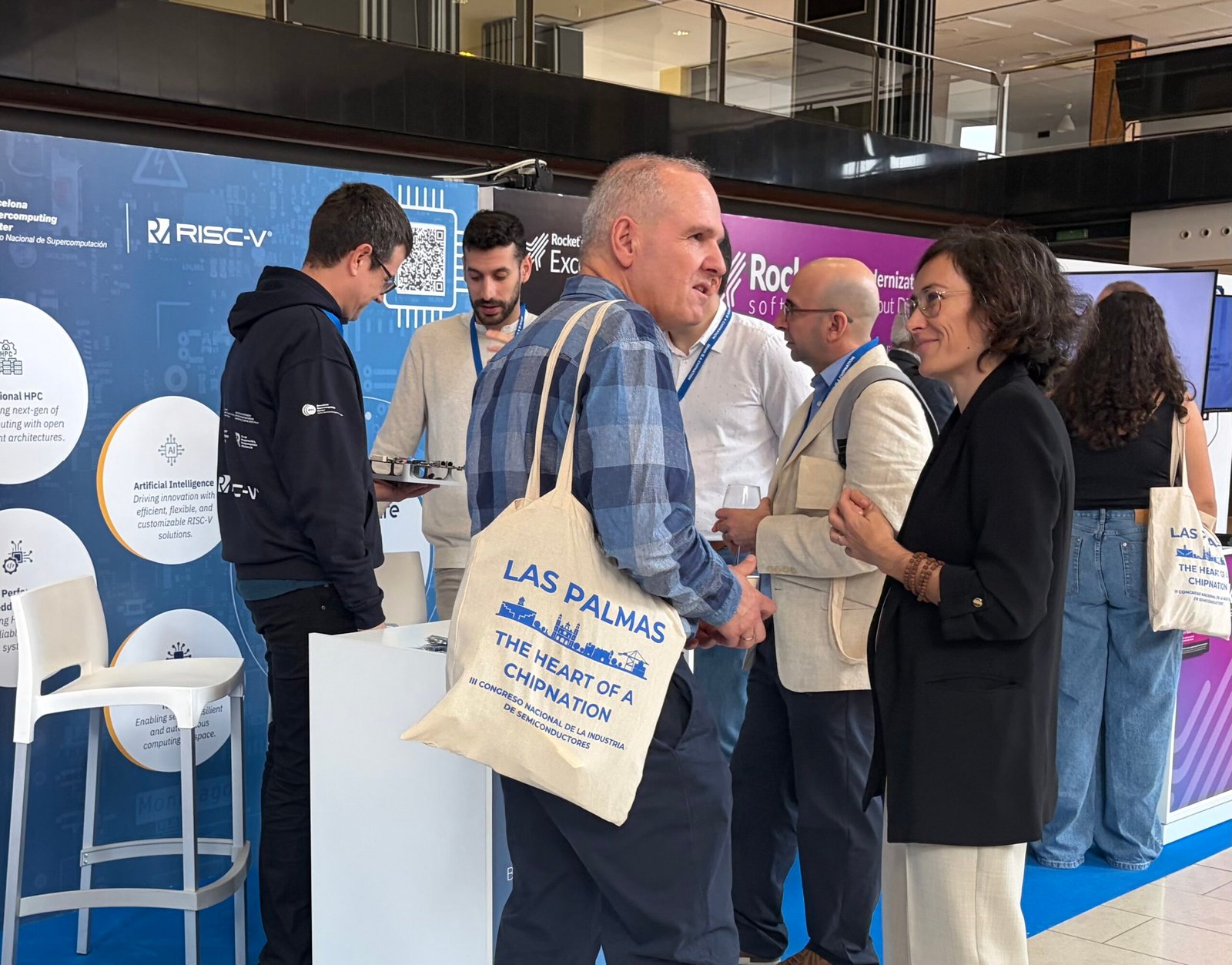
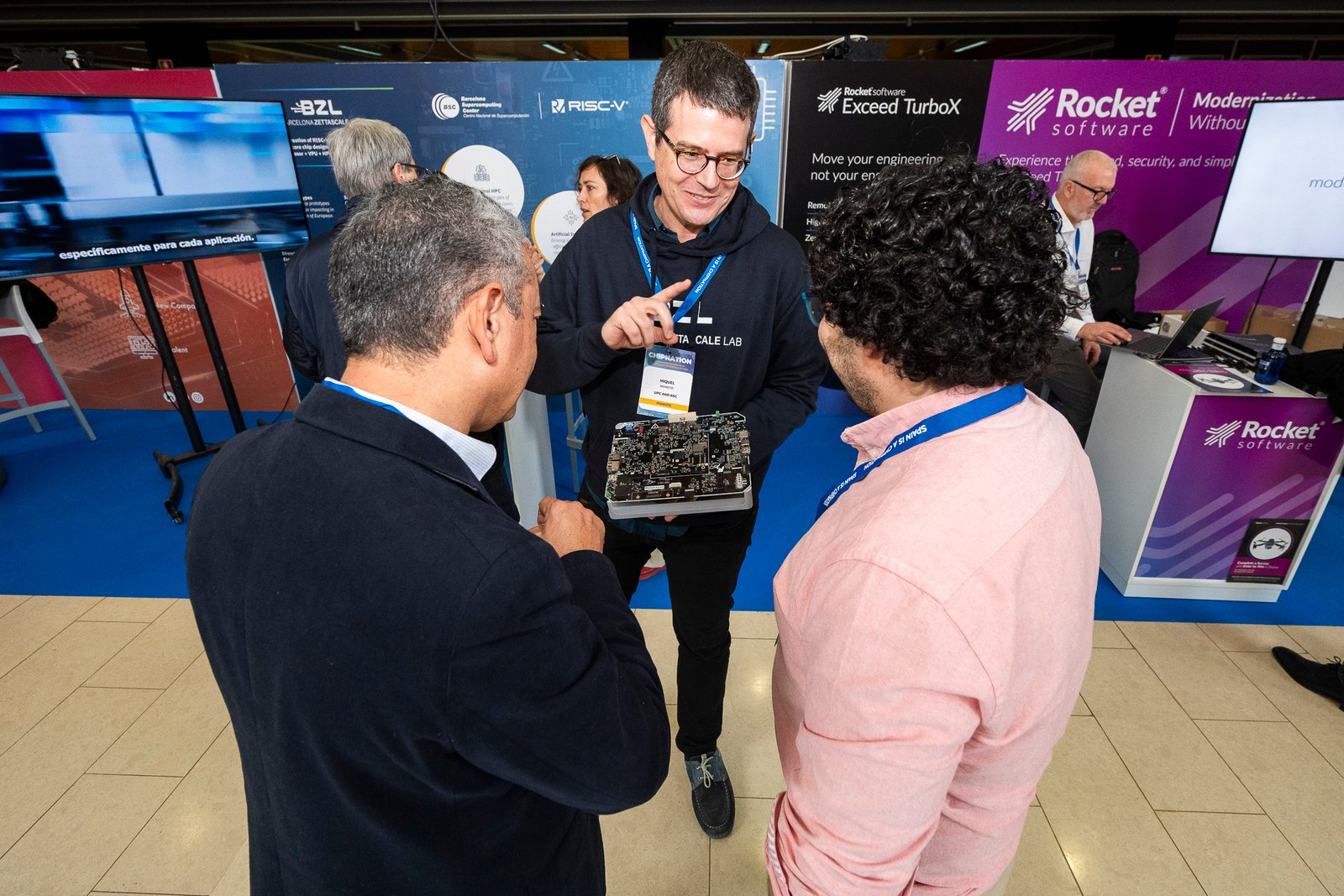
The Barcelona Zettascale Lab (BZL) project was present at ChipNation to showcase how the project is improving European skills in the design and development of the next generation of High-Performance Computing chips based on open hardware and architectures (RISC-V). This is a critical and strategic step in the race for achieving European technological sovereignty.
BZL, together with other European projects in which BSC-CNS (i.e., European Processor Initiative – EPI, The EUPilot projects), is contributing to reduce Europe’s dependency on third parties for hardware technologies. All these advancements, and more, were available for all the attendants in our booth!
the attendants in our booth!
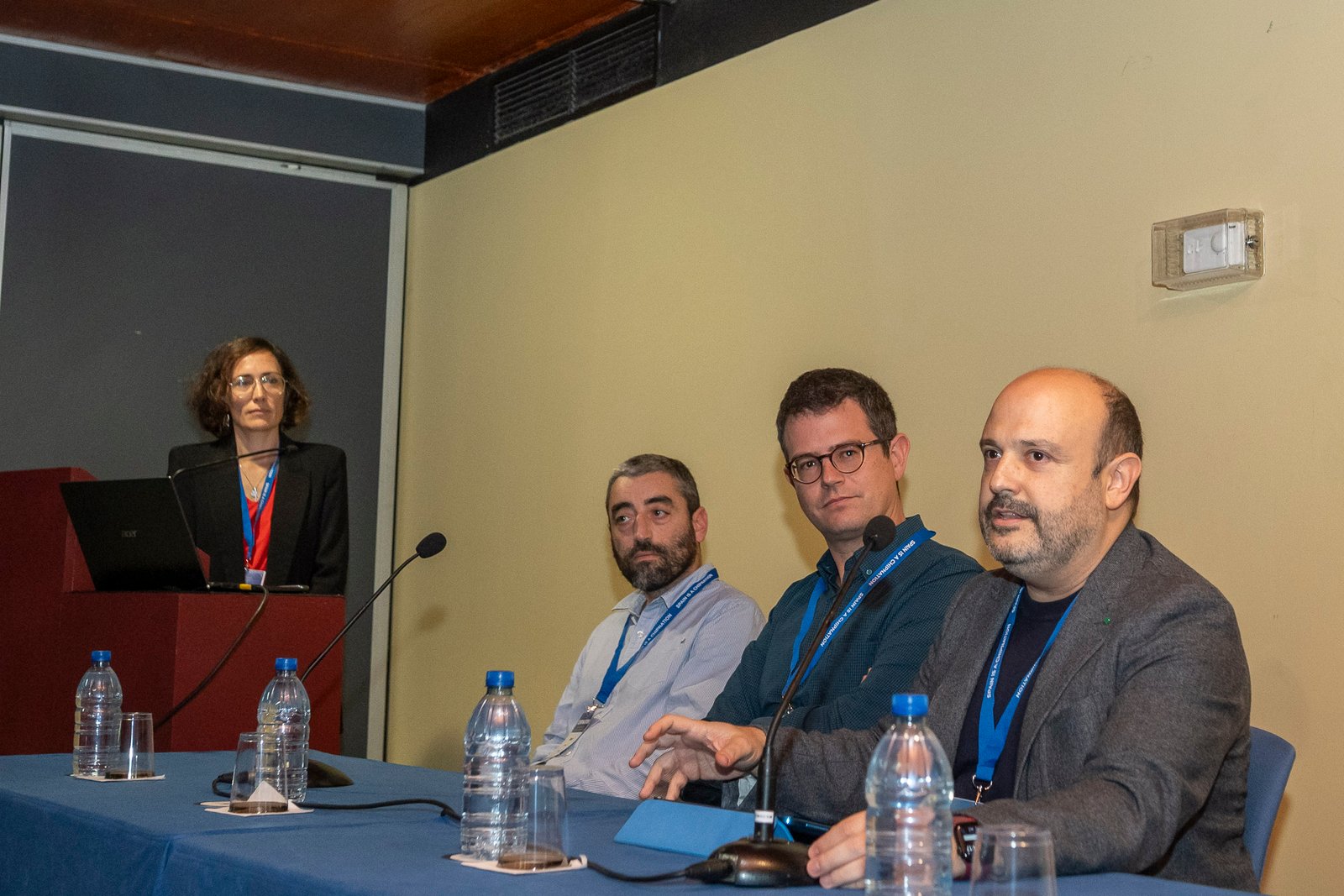
Besides of that, Miquel Moretó, coordinator of the hardware activities of the Barcelona Zettascale Lab (BZL), took part on the round table “RISC-V opportunities in Spain”. Moderated by Teresa Cervero and together with Vincent Casillas (Sipearl) and Jose Correcher (Indra), they outlined the latest challenges and opportunities of the RISC-V European (and Spanish) ecosystem and highlighted its importance towards European sovereignty in processor design.
“It’s really important to be present at events like this because they allow us to build bridges between research and industry, identify opportunities for collaboration, and make sure that the work being done in Spain contributes to Europe’s long-term semiconductor strategy,” states Miquel Moretó, coordinator of hardware activities at the BZL.
This congress is a great opportunity to dive in the field of semiconductors and chip design, creating synergies and learning how European companies and research centres are working together.